
If you run a small business—especially as a mother juggling a hundred things every day—you’ve probably heard people say “you need to pick a niche.” And most business owners think,
“Well, I already know my niche.”
But here’s the truth most people don’t realise:
👉 If you’re still struggling with sales, getting the wrong customers, or constantly attracting people who don’t buy… your niche is NOT clear enough.
👉 If you feel like your audience doesn’t “get” your product… your niche is not aligned.
👉 If your business feels stuck, slow, or invisible online… your niche is too broad.
This is one of the most misunderstood parts of marketing—and it’s exactly why many wonderful small businesses feel discouraged or overwhelmed long before they should.
Let’s break this down in the simplest, clearest way possible.
What a Niche REALLY Means (And Why Most People Get It Wrong)
A niche is NOT just who buys your product.
It’s not:
❌ “Women between 25–45”
❌ “People who like natural skincare”
❌ “Healthy-conscious customers”
These are categories, not niches.
A niche is a specific group of people who:
✨ Have a specific need
✨ Want the type of product you sell
✨ Can afford it
✨ Care about the way you deliver it
✨ Prefer your style, your approach, your values
A niche is not “everyone who could buy your product.”
It’s the small group most perfectly matched to what you sell.
Why Niches Get Confusing (Especially When You Move Online)
Let’s look at a common example.
A health food store in Queens Park, London sells to:
➡️ Health-conscious people
➡️ Who live in Queens Park
➡️ And like the convenience of a local store
Their location defines part of their niche.
But when the same store goes online, the owner often thinks:
“Great! Now I can sell to every health-conscious person in the UK!”
This is where things break.
Online, your customers are not tied to location anymore.
They have unlimited options. They can choose any other brand that feels closer to their needs, lifestyle, or values.
That same store suddenly goes from being “the perfect option for locals”
to “one of 5000 health shops online.”
And unless they choose a clearer niche, their message becomes too generic:
➡️ “Healthy products”
➡️ “Natural foods”
➡️ “Organic options”
Every shop says that.
But imagine if they shifted their niche slightly to something specific and real, like:
“Health-conscious working mothers who want high-quality foods for their families and love fast, free delivery.”
Now the messaging changes completely.
Suddenly they can talk about:
✨ Healthy snacks kids love
✨ Food prep for busy parents
✨ Family-friendly healthy swaps
✨ High-quality products that last
✨ Delivery timed around busy schedules
Now this is a niche that listens, because they feel spoken to.
The Hard Truth: If Your Niche Isn’t Clear, Everything Becomes Harder
Sales feel harder.
Marketing feels confusing.
Content doesn’t land.
Your posts feel invisible.
People don’t understand the value of what you sell.
You attract the wrong customers with the wrong expectations.
This happens to almost every business at the beginning.
And it is always a niche problem.
Clues That Show You Don’t Know Your Real Niche (Even If You Think You Do)
These happen ALL the time, especially in product-based small businesses.
1. You attract “annoying” or time-wasting customers
For example:
You sell handmade natural skincare.
A potential customer finds you on Instagram.
They ask 27 questions.
They compare your products to supermarket brands.
They don’t buy.
This isn’t a “bad customer.”
It’s a misaligned customer.
2. You attract people who complain about things that are normal for your product
Example:
Someone buys your natural skincare balm and complains the expiration date is short.
Natural products do have shorter shelf lives.
This person wasn’t wrong—they were just the wrong niche.
3. You feel like you’re lowering your prices just to make a sale
This happens when your audience doesn’t value what you sell.
If they did, they wouldn’t question the price—they would be thankful they found you.
4. Your posts get likes but no sales
This means people enjoy the content, but the right people—the ones who actually need your product—aren’t seeing your message.
5. Your audience feels mixed or random
You get comments or followers from people who have nothing to do with your market.
Your content may be too broad, so your message spreads without direction.
6. You feel like you’re talking to everyone, hoping someone buys
This is the biggest sign.
Your audience should feel like one clear group, not “a mix of people who could buy.”
Why the Right Niche Changes Everything
When you speak directly to the group who TRULY needs and wants what you offer:
✨ You become memorable
✨ People feel understood
✨ Your message stands out
✨ You stop competing on price
✨ Marketing becomes simple
✨ Content becomes easy
✨ Your ideal customer finds you fast
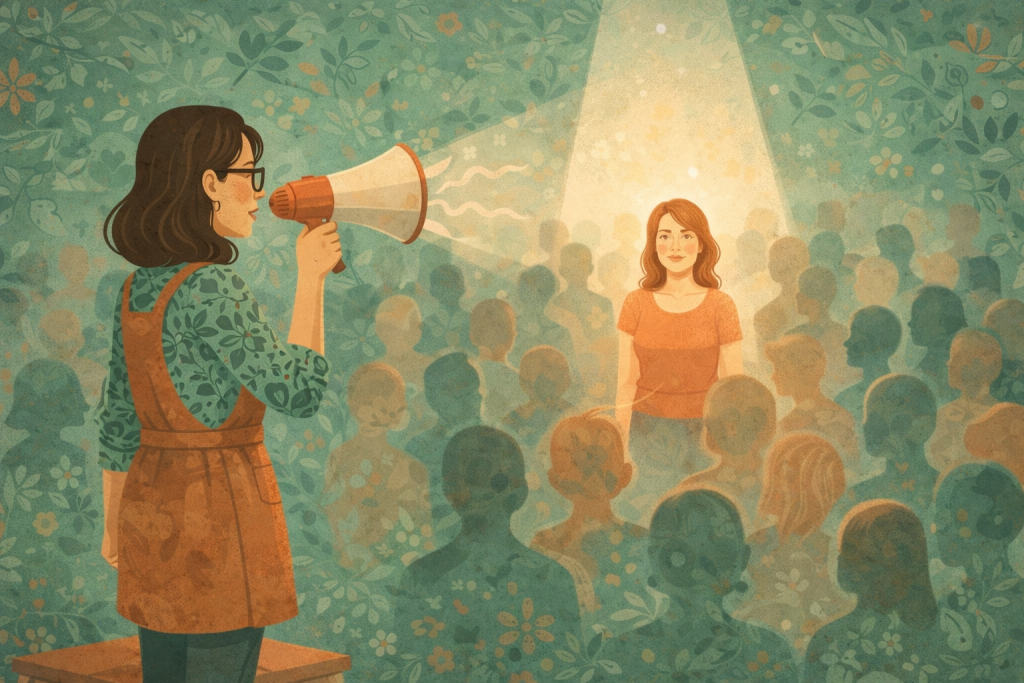
In a world full of noise, people only listen if you’re talking directly to them.
And that’s only possible when you have a clear, specific, soul-aligned niche.
Ready to Finally Understand Your Real Audience? Start with the Free Lesson That Makes Everything Click.
If you read this post and thought “Oh wow… maybe I don’t actually know my niche as well as I thought” — that’s exactly why I created Lesson 2 of my course, and I’m giving it to you completely free.
This lesson is simple, practical, and made specifically for busy mothers building a business with limited time and zero marketing experience.
Inside the free lesson, you’ll learn:
✨ Who your real audience is (not who you think you’re selling to)
✨ How to define your niche properly — using one clear person you can visualise
✨ How to uncover what your audience truly cares about
✨ How to find where they actually spend time online/offline
✨ How to use ChatGPT as a thinking partner so you’re never staring at a blank page again
This is the exact process big brands use to understand their customers deeply — but simplified, softened, and tailored for small-business-building mums who just want clarity and momentum.
By the end of the lesson, you will have:
✔ A clear niche
✔ A real ideal customer profile
✔ A list of places your audience hangs out
✔ A strong foundation for all your marketing
And you’ll finally feel that deep confidence that comes from actually knowing who you’re talking to.
No commitment, just clarity.
Once you complete it, your marketing will feel lighter, easier, and so much more effective.